ESG has become an increasingly important topic in Hong Kong’s business community. For many small and medium-sized enterprises, the first question is simple: what exactly is ESG, and why should SMEs pay attention to it?
ESG is no longer only a reporting matter for large listed companies. It is becoming part of customer trust, supplier expectations, brand reputation and long-term business competitiveness. For SMEs, getting started does not necessarily mean launching a large-scale transformation project. It means choosing a practical, relevant and measurable starting point.
What Is ESG?
ESG stands for Environmental, Social and Governance. It is a framework used to evaluate how a business manages its environmental impact, social responsibilities and internal governance practices.
Environmental How a company reduces emissions, saves energy, manages resources and responds to climate-related risks.
Social How a company treats employees, customers, suppliers and the wider community, and how it manages its social impact.
Governance How a company builds accountability, transparency, compliance practices and risk management into its operations.
For SMEs, ESG does not need to begin as a complex reporting exercise. A practical first step is to build basic records and take part in initiatives that are relevant to the business and meaningful to the community.
Why Should SMEs Start ESG?
1. Customer and Partner Expectations Are Rising
Large enterprises, listed companies and multinational corporations are placing greater emphasis on supply-chain ESG. When these companies report their sustainability performance, they may also ask suppliers and partners for basic ESG information.
SMEs with no ESG record may face additional barriers in tendering, renewal discussions, supplier onboarding or corporate partnership opportunities.
2. ESG Builds Brand Trust
Customers, employees and business partners increasingly value companies that show social responsibility. When a business can clearly explain how it supports the community and turns its capabilities into social value, it becomes easier to build trust.
3. ESG Supports Risk Management
ESG is not only a communications topic. It is also a practical risk management framework. Environmental risks, labour practices, data protection, supply-chain transparency, community relations and corporate governance can all affect business operations.
4. ESG Can Start with Low-cost Actions
One common misconception is that ESG must begin with expensive consultants, complex systems or large audits. In reality, many ESG actions can start small, including energy saving, waste reduction, employee care, community support, digital inclusion and charitable partnerships.
The key question is not whether the project is large, but whether it is specific, measurable and aligned with the company’s values.
Where Can SMEs Begin?
For resource-conscious businesses, the first ESG step should be practical rather than complicated. SMEs can begin by:
1. Choosing an ESG topic that relates to their business 2. Selecting an initiative with clear costs and measurable outcomes 3. Keeping records that can support company profiles, websites, customer presentations or annual reviews
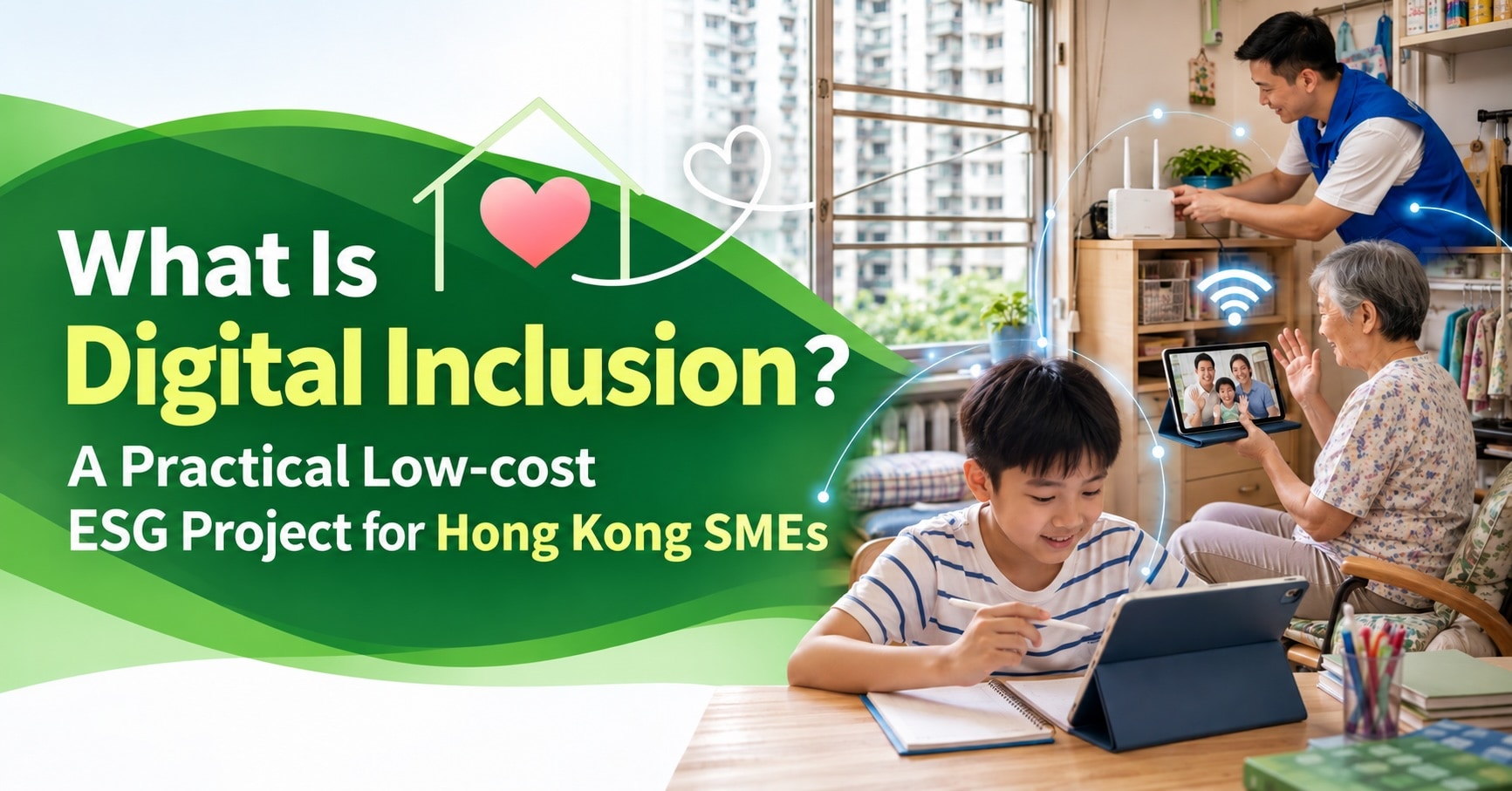
Global Call Group’s Low-income Families Network Support Programme is one example of a practical ESG starting point focused on digital inclusion. The programme supports low-income families with children, subdivided-unit households, single-parent families, elderly people living alone and ethnic-minority families with a 4G SIM-card router and two years of unlimited-data home Wi-Fi service.
This type of initiative is suitable for SMEs because:
- The beneficiary groups are clear
- The participation cost is transparent
- The social value is easy to understand
- The outcomes can be measured and recorded
- The initiative naturally connects with communications, technology, education and community support
ESG Is Part of Market Trust
ESG should not be viewed simply as an administrative burden. It helps companies respond more systematically to market expectations, customer requirements and social needs. For SMEs, building a basic ESG record early can make future customer enquiries, partnership discussions and supply-chain requirements easier to handle.
Businesses do not need to wait until they become large corporations before starting ESG. With the right initiative and clear records, SMEs can begin building a credible social responsibility foundation today.
If your business is looking for an affordable, practical and measurable way to begin ESG, learn more about Global Call’s Low-income Families Network Support Programme. By supporting stable home connectivity for families in need, your company can promote digital inclusion while building a concrete ESG / CSR record.
Looking for the Right Connectivity Solution?
Talk to Our Experts
As one of Hong Kong’s leading telecommunications service providers, Global Call provides integrated communications and data solutions for individuals and businesses, including mobile data SIMs, IoT connectivity, international roaming and tailored enterprise solutions.
Enquiries & Partnerships
Or complete the contact form below to get in touch with our team.