
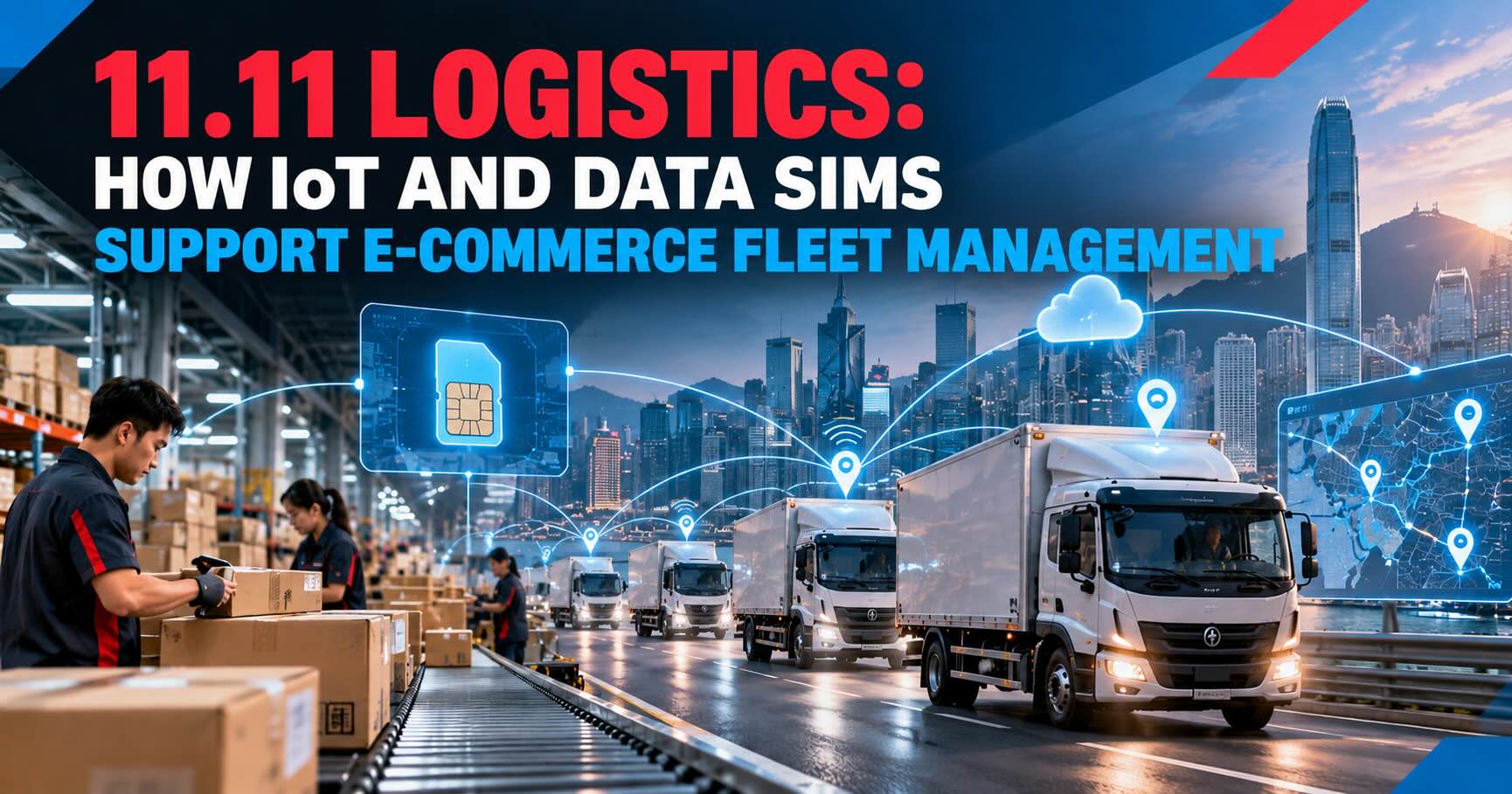
Every 11.11 shopping festival brings a sharp increase in e-commerce order volumes. For logistics fleets, this is not only a business opportunity — it is also a major operational challenge.
When customers repeatedly ask, “When will my order arrive?”, fleet operators that still rely on phone calls, WhatsApp messages or verbal driver updates may only be able to provide estimates. Without timely and reliable operational data, customer service teams have limited visibility, which can affect the overall delivery experience.
To prepare for peak-season demand, IoT (Internet of Things) technology and a suitable B2B Data SIM solution for fleet management can help logistics operators improve visibility across vehicles, drivers and deliveries. This article explains how IoT connectivity can support e-commerce logistics and how fleet companies can prepare for the 11.11 peak.
1. Three Key 11.11 Logistics Challenges
1. Order Surges Can Disrupt Fleet Dispatch
During 11.11, order volumes may be several times higher than on ordinary trading days. Fleet operators must complete a large number of deliveries within a limited time.
Without real-time visibility, dispatchers may not know where each vehicle is, which routes are congested, or whether a driver has capacity to accept further delivery tasks. This makes it more difficult to respond quickly to changing demand.
2. Customer Enquiries Increase Rapidly
“Where is my parcel?” is one of the most common questions received by logistics customer service teams during peak shopping periods.
If customer service staff do not have access to timely tracking data, they may only be able to provide general updates. This can create uncertainty for customers and place additional pressure on frontline teams.
3. Connectivity Gaps Can Delay Logistics Data
During cross-district, cross-border or long-distance journeys, data connectivity may be affected by local coverage, network availability, roaming arrangements and device configuration.
When vehicle information is not transmitted promptly, management teams may have less visibility of fleet operations and may need more time to make dispatching decisions.
2. How IoT Supports Fleet Management
IoT, or the Internet of Things, connects equipment such as GPS trackers, in-vehicle cameras, sensors and telematics devices to a management platform. Subject to the devices and software used, these tools can help businesses collect, transmit and analyse operational data from vehicles and cargo.
This can support a more connected view of people, vehicles and goods.
Common IoT Applications in Fleet Management
| Application | Function | Potential Value for E-commerce Logistics |
|---|---|---|
| Real-time GPS tracking | Tracks vehicle locations and travel routes | Supports delivery-status updates and ETA planning |
| In-vehicle cameras | Records driving conditions and selected driving events | May assist with incident reviews, driver coaching and cargo-security investigations |
| Temperature and humidity sensors | Monitors cargo-compartment conditions | Useful for cold-chain, food, pharmaceutical or sensitive goods |
| Fuel and vehicle-status monitoring | Collects engine, fuel-use and diagnostic data | Supports maintenance planning and operational analysis |
| Geofencing | Sends alerts when vehicles enter or leave defined areas | Can support arrival/departure alerts and dispatch workflows |
For these devices to transmit data to a management platform, fleet operators need a suitable connectivity solution. A B2B Data SIM for fleet management can provide mobile data connectivity for compatible IoT devices.
3. Data SIMs: A Connectivity Layer for IoT Fleet Management
It may appear sufficient to insert a standard consumer SIM card into a GPS tracker. However, consumer mobile plans and B2B IoT Data SIM solutions can differ in areas such as management features, commercial terms, coverage options, device support and security controls.
Key Considerations for B2B Fleet Management Data SIMs
1. Multi-network and Roaming Options
Depending on the provider and service plan, an IoT Data SIM may access more than one partner network. This can improve connectivity resilience when vehicles travel through different service areas.
Network selection, roaming arrangements, available networks and actual coverage vary by provider, geography and plan. Fleet operators should confirm the specific coverage and roaming policy before deployment.
2. Shared Data Pools
Some B2B Data SIM plans allow data usage to be managed across multiple SIM cards through a shared data pool. This can give fleet operators more flexibility in allocating usage among connected vehicles and devices.
Whether this reduces overall cost depends on the pricing plan, data-use profile, fleet size and any applicable overage charges.
3. Centralised Connectivity Management
Many enterprise IoT connectivity platforms allow administrators to monitor SIM status, usage and connectivity alerts from a central dashboard.
Depending on the platform, administrators may also be able to activate, suspend or apply policies to SIM cards remotely. Available functions vary by provider and contract.
4. Security Architecture
A B2B IoT connectivity solution can support a stronger security architecture when used with suitable technical controls. These may include secure APN or private-network options, encrypted data transmission, device authentication, VPN connectivity and role-based access controls.
These measures can help reduce the risk of unauthorised access, but no system can guarantee absolute protection against data loss, cyber incidents or breaches.
5. Scalability for Fleet Deployment
IoT connectivity solutions can be deployed from small fleets to large, multi-vehicle operations. The appropriate approach depends on the number of vehicles, devices per vehicle, data usage, coverage requirements and integration needs.
4. How IoT and Data SIMs Can Support E-commerce Logistics
When IoT devices are connected through a suitable B2B Data SIM solution and integrated with a fleet-management platform, operators can gain better operational visibility and support more informed decisions.
1. Improved Fleet Visibility
GPS devices can transmit location, speed and route information to a cloud-based platform. Dispatchers can then view available vehicle data on a map or management dashboard.
This can help customer service teams provide more informed delivery updates, subject to the accuracy and availability of the tracking data.
2. Delivery-progress Monitoring and ETA Planning
When integrated with routing, traffic and fleet data, a management platform can generate estimated times of arrival (ETAs).
If customer-notification functions are configured, the platform may also send updates when delivery status changes or delays are identified.
3. Dispatch Support and Route Optimisation
Advanced fleet-management platforms may use operational data, route information and analytics tools to help identify more efficient routes, monitor vehicle utilisation and support dispatch decisions.
Some systems may include AI-assisted optimisation features. Their effectiveness depends on data quality, system integration and the operational rules set by the fleet operator.
4. In-vehicle Cameras and Cargo Protection
In-vehicle cameras can provide recorded footage that may assist with incident reviews, insurance claims, driver training or dispute handling.
Their usefulness depends on camera positioning, recording settings, data retention, connectivity and compliance with applicable privacy requirements.
5. Data-led Operational Planning
Fleet-management reports can help management teams review vehicle utilisation, fuel consumption, delivery performance, idling time and other operational indicators.
These insights can support ongoing process improvement, maintenance planning and resource allocation.
5. 11.11 Peak-season Preparation for Fleet Operators
The 11.11 peak is an important time to assess whether your fleet-management capabilities are ready for a higher volume of deliveries.
Step 1: Review Your Current Fleet-management Process
Assess whether your GPS tracking, driver communications and dispatch workflows can support peak demand. If operations still rely heavily on manual calls or driver updates, identify where digital tools could improve visibility.
Step 2: Select a Suitable Data SIM Solution
Choose a B2B Data SIM solution based on your operating areas, coverage needs, data-use profile, device compatibility, roaming requirements, management functions and commercial terms.
Do not assume that every Data SIM includes multi-network access, shared data pools, remote management or private-network options. Confirm these features with the provider.
Step 3: Install GPS and In-vehicle Camera Equipment
Plan GPS and in-vehicle camera installation ahead of the peak period where possible. Installation time varies according to vehicle type, wiring complexity, device configuration and the number of cameras or sensors required.
A professional installation process can help reduce the risk of wiring, power-supply or device-placement issues.
Step 4: Integrate Systems Through a Central Platform
Where appropriate, connect GPS trackers, cameras, sensors and connectivity tools to a central fleet-management platform. This can provide a more consolidated view of fleet activity and support dispatch workflows.
Step 5: Train Frontline Teams
Ensure dispatchers, customer service staff and relevant drivers understand how to use the new tools and interpret tracking information appropriately.
Clear internal processes are important, especially when customer updates depend on data accuracy, device connectivity and system availability.
6. 11.11 Campaign: In-vehicle Camera and GPS Installation
To support fleet operators preparing for the peak season, we offer a limited-time 11.11 Campaign.
🚚 In-vehicle Camera and GPS Installation Service
- Professional on-site installation for compatible fleet vehicles
- Options to connect compatible devices with a B2B fleet-management Data SIM solution
- A combined approach to vehicle tracking and driving-event recording
- Installation scope and completion time subject to vehicle type, device configuration and site conditions
📡 B2B Fleet Management Data SIM Solution
- Connectivity options designed for compatible fleet-management and IoT devices
- Plans may include data-pooling, centralised management or roaming options, subject to the selected package
- Support for fleet operators seeking clearer oversight of device connectivity and data usage
👉 Contact us to discuss your 11.11 fleet-upgrade requirements and request a suitable solution for your operational needs.
7. Frequently Asked Questions
Q1: What Fleet Size Is Suitable for an IoT Fleet-management Solution?
A: IoT fleet-management solutions can be designed for small fleets as well as larger multi-vehicle logistics operations. Suitability depends on the number of vehicles, required devices, operating locations, management requirements and available budget.
Q2: What Is the Difference Between a Data SIM and a Standard SIM Card?
A: A B2B Data SIM may offer functions and commercial features designed for connected devices, such as centralised usage visibility, connectivity-management tools, data-pooling options, device support and roaming arrangements. Features vary by provider and plan, so businesses should compare the specific service terms before deployment.
Q3: How Long Does GPS and In-vehicle Camera Installation Take?
A: Installation time varies by vehicle model, wiring complexity, equipment configuration and the number of devices installed. A provider can normally provide an estimate after reviewing the vehicle and installation requirements.
Q4: Is It Too Late to Upgrade During the 11.11 Period?
A: Early planning is recommended to allow time for equipment selection, installation, testing, integration and staff training. If time is limited, discuss a phased or prioritised rollout with your provider based on the most critical vehicles and routes.
Q5: Is Logistics Data Secure?
A: Data protection depends on the overall solution design, including the Data SIM service, device security, platform configuration, access controls, encryption, network architecture and internal operating procedures. Businesses should ask providers about the specific security measures, responsibilities and service terms that apply.
Conclusion: 11.11 Is an Opportunity to Strengthen Fleet Operations
For e-commerce logistics fleets, 11.11 is both an operational challenge and an opportunity to demonstrate service capability.
By combining suitable IoT devices, a B2B Data SIM solution and a well-integrated fleet-management platform, operators can improve operational visibility, support delivery-progress monitoring and make more informed dispatch decisions.
Preparing before peak demand can help fleets manage the 11.11 period more effectively while building a stronger foundation for year-round logistics operations.
📩 Contact us or submit an enquiry for details of the 11.11 Campaign and discuss a fleet-management solution suited to your business.
Looking for the Right Connectivity Solution?
Talk to Our Experts
As one of Hong Kong’s leading telecommunications service providers, Global Call provides integrated communications and data solutions for individuals and businesses, including mobile data SIMs, IoT connectivity, international roaming and tailored enterprise solutions.
Enquiries & Partnerships
Or complete the contact form below to get in touch with our team.